Civil authority coverage in Colorado: when a government order triggers your business income policy
A government order closed you down and the damage was to someone else's property. That is the exact scenario civil authority coverage was written for — and the exact scenario insurers fight hardest.
11 min read Published 2026-02-11 Updated 2026-06-04 Colorado Coverage Lawyers
Civil authority coverage is one of the least understood provisions in commercial property
insurance and one of the most valuable. It responds when you were not damaged at all — when the damage
happened somewhere else and a government body's response to it shut you down.
Why civil authority coverage exists
The main business income insuring agreement requires direct physical loss of or damage to property
at the described premises. That is a sensible limit, but it leaves an obvious gap. Consider the
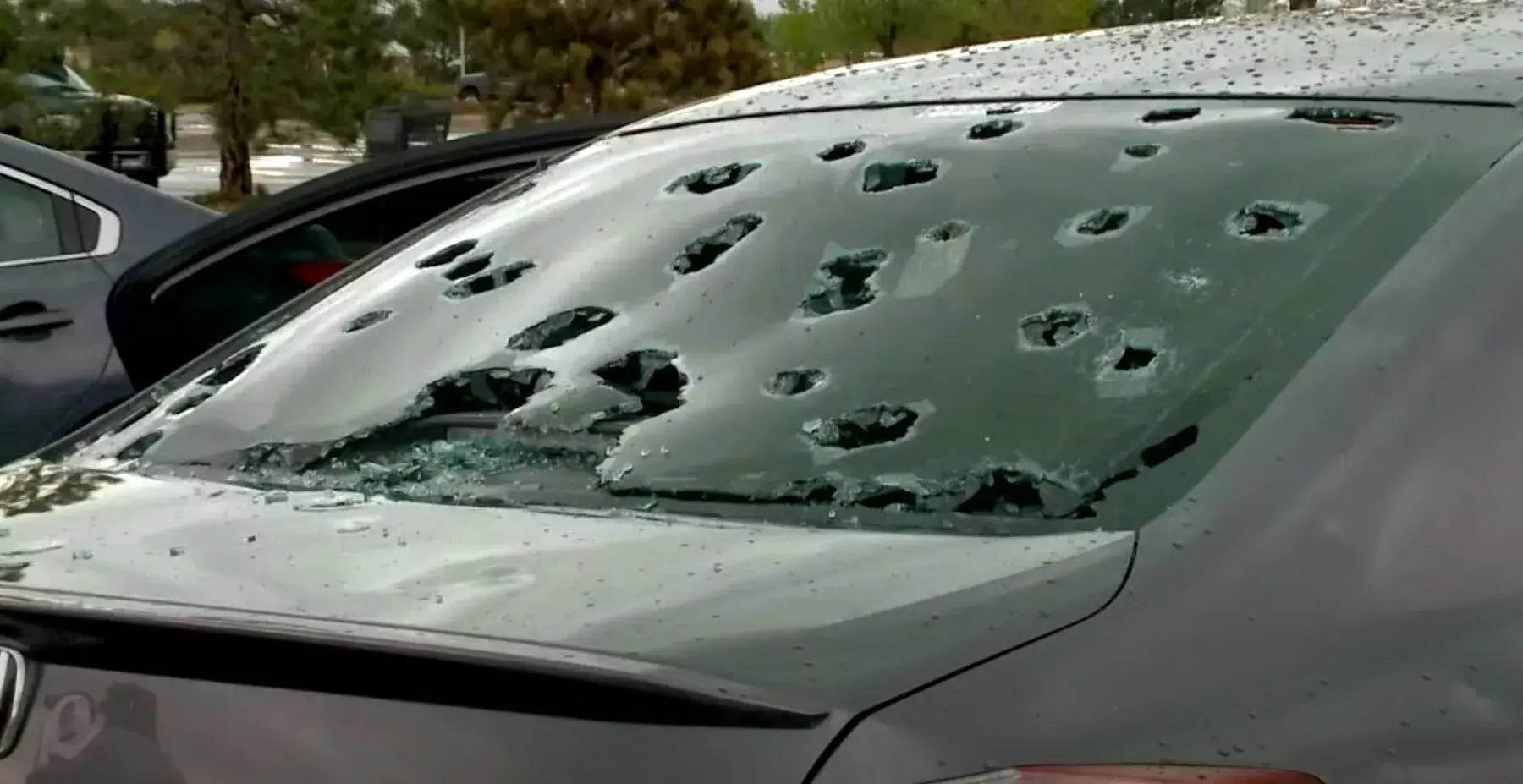
example the insurance industry itself has used for decades: a retail unit inside a shopping mall. A
hailstorm shatters the mall's glass ceiling. Your unit is untouched. The fire department decides the
concourse is unsafe and orders the mall closed to the public for six weeks.
You have lost six weeks of trade because of a covered peril, and you have suffered no damage whatsoever.
Without civil authority coverage, your insurer would say — correctly, on the main grant — that
nothing at your premises was damaged, so nothing is owed.
The civil authority extension closes that gap. In its typical form it promises to pay the actual loss of
business income and necessary extra expense you sustain when access to the described premises is
prohibited by order of a civil authority, where that order results from damage to property
other than the described premises, caused by a covered cause of loss.
The key structural point
Civil authority is a separate trigger, with separate elements, a separate waiting period and a separate
time limit. It can pay when the main business income coverage does not, and it must be analysed on its own
terms rather than folded into the main claim.
The four elements insurers test
Almost every civil authority dispute reduces to one of four questions.
Element
What the insurer will argue
What to look for
Was there an order of a civil authority?
That a recommendation, guideline or advisory is not an order
Mandatory language, an enforcement mechanism, penalties for non-compliance
Did it prohibit access?
That partial restriction, curbside service or reduced capacity is not prohibition
Whether the policy says “prohibits” or the softer “impairs” or
“denies”; whether access for some purposes was completely barred
Did it result from damage to other property?
That the order was issued for a preventive or public-health reason, not because of damage
The recitals in the order itself — what does it say caused it?
Was that damage caused by a covered cause of loss?
That an exclusion reaches the nearby damage
Whether the exclusion is in your form at all, and how it is worded
Notice how much of that turns on documents rather than opinions. The order is a public record. The recitals
in it are evidence of why it was issued. This is a claim you build out of paper.
The one-mile problem
Many modern forms add a geographic qualifier: the damaged property must be within a stated distance of your
premises, commonly one mile. Some forms say “in the immediate area.” Older forms say nothing at all.
This single sentence decides a great many claims, and it is the first thing to check. If your form contains
a one-mile radius, the analysis becomes concrete: what covered damage occurred within a mile, and does the
order reference it? If your form contains no radius, the insurer will nevertheless often argue for one by
implication. It is not in the contract, and it should not be read into it.
How Colorado has approached it
Colorado courts read insurance policies as contracts, giving unambiguous terms their plain and ordinary
meaning and construing genuine ambiguity against the drafting insurer. Exclusions are read narrowly, and the
insurer bears the burden of establishing that one applies. Those default rules matter more in civil authority
cases than in most, because the operative terms — “prohibits,” “access,”
“immediate area” — are so rarely defined.
The pandemic produced an unusual natural experiment in Colorado. Governor Polis's initial stay-at-home
order, Executive Order D 2020-017 of 25 March 2020, was framed around person-to-person transmission. On
6 April 2020 the extension, Executive Order D 2020-024, added language stating that COVID-19 “also
physically contributes to property loss, contamination, and damage due to its propensity to attach to
surfaces for prolonged periods of time.”
That change is instructive well beyond the pandemic. It shows how much weight the recitals of an order
carry: the same closure, ordered by the same governor, was framed first as a public-health measure and later
as a response to property damage. When you build a civil authority claim, the text of the order is not
background. It is the centre of the case.
Waiting periods and time limits
Civil authority coverage is usually bounded at both ends.
A waiting period — commonly 72 hours — before coverage begins. A four-day
closure with a 72-hour wait yields one day of coverage, which is why short orders often produce nothing.
A duration cap — commonly four consecutive weeks, sometimes 30 days, occasionally
longer by endorsement. Coverage ends when the cap is reached even if the order continues.
Both are in the endorsement rather than the base form in many programmes, which is another reason the
complete policy matters. Two businesses with the same carrier and the same loss can have materially different
civil authority coverage because one bought an extension.
Ingress/egress: the coverage next door
Sitting beside civil authority in many forms is an ingress/egress extension. It responds when access to
your premises is physically prevented — a collapsed overpass, a blocked road, a cordon —
rather than legally prohibited. It does not require an order at all.
The two are frequently confused, and a claim presented under the wrong one gets denied on a technicality.
Where a single event produces both a physical obstruction and an official order, present both.
How to prove the claim
Obtain the order itself in its official published form, including every amendment and
extension. Screenshots of news coverage are not evidence of what an order said.
Identify the damaged property the order responded to, with its address and distance
from your premises. If a radius applies, measure it and document the measurement.
Establish the covered cause of that damage — storm reports, fire department
records, engineering findings.
Document the prohibition as it applied to you. Signage, correspondence from a landlord
or municipality, enforcement notices, and dated photographs of closed access points.
Build the income loss with a forensic accountant, separating the civil authority period
from any other interruption so the two are not conflated.
Present civil authority as its own claim
The most common practical error is burying civil authority inside a general business interruption
submission. It has different elements and a different period. Give it its own section, its own timeline and
its own calculation, and the adjuster has to engage with it rather than dismiss it with the main claim.
A worked example, week by week
Abstract elements are hard to argue about. Here is the same claim as a timeline, with the coverage
question attached to each date.
When
What happens
The coverage consequence
Day 0
A fire destroys the anchor tenant's plant room two doors down
Damage to property other than yours, by a covered cause. Element three and element four are in place.
Day 1
The fire marshal issues a written order closing the block to the public
Element one. Get the order number and the recitals the same day — they are hardest to obtain months later.
Days 1–3
You are shut. No customers, full payroll
Inside the 72-hour waiting period. Nothing is payable yet, but the loss still needs recording.
Day 4
Still closed
Civil authority coverage begins. Start the daily record here.
Day 11
The order is relaxed to allow deliveries but not customers
Does that end the prohibition? Read the verb in your form. Partial relaxation frequently does not.
Day 26
The order is lifted
Coverage ends, unless your form carries an extended period for the recovery of trade.
Day 27+
Customers trickle back over six weeks
Not civil authority any more — but potentially extended period of indemnity, which is a separate ask.
Two things fall out of that table. The first is that the useful evidence exists for about a week and then
starts disappearing. The second is that the claim has at least three distinct segments, each governed by a
different provision, and presenting them as one undifferentiated “we lost a month” invites a
single blanket denial.
How it interacts with the rest of the policy
Civil authority never sits alone in the policy. It sits alongside provisions that can either support it or
quietly cap it, and the interactions are worth mapping before you submit anything.
The main business income grant. If your own premises were also damaged, both can
respond — but not to the same dollar twice. Segregating the two periods properly is what stops an
insurer treating the overlap as a reason to pay neither.
Extra expense. Often payable during the civil authority period as well. Temporary
premises, expedited freight, storage, overtime to catch up. Frequently the fastest money in the file
because the receipts already exist.
The deductible. Business income deductibles are often expressed in time rather than
dollars — a 24- or 72-hour waiting period. Check whether that waiting period runs concurrently with
the civil authority waiting period or consecutively. The difference is days of coverage.
Sub-limits. Civil authority is very commonly sub-limited, sometimes to a fixed sum
well below the policy limit. Find the number in the declarations before you build the model.
Dependent property coverage. If the damaged property belongs to a named supplier or
customer, you may have a second, wider route to the same loss.
Read the definitions section twice
“Period of restoration,” “suspension,” “operations” and
“described premises” are all defined terms in most forms, and the definitions are not
intuitive. A claim can turn entirely on whether “operations” is defined to include the
business you conduct at the premises or only the premises themselves.
Questions to put to your adjuster in writing
Written questions do two things: they get you answers, and they build the record that decides whether any
later delay was reasonable. These are the six we send.
Please confirm whether the policy contains a civil authority extension, and identify the form and
endorsement number.
What waiting period, radius limitation and duration cap apply to that extension?
Is the civil authority waiting period concurrent with, or in addition to, the business income
waiting period?
What sub-limit, if any, applies to civil authority coverage?
Has the insurer investigated whether damage by a covered cause occurred within the relevant radius?
If so, please provide the findings.
If coverage is being declined, please identify the provision relied on and explain how it applies to
the facts of this loss.
An insurer that answers all six promptly is handling the claim properly, and you now know where you stand.
An insurer that answers none of them for two months has told you something else, and the correspondence
proving it is already in your sent folder.
Five mistakes that sink these claims
Assuming a partial closure does not count. Read the verb
in your form. “Prohibits access” and “impairs access” are not the same test.
Missing the recitals. If the order says it was issued
because of damage, quote that sentence in the submission. If it does not, look for an amendment that does.
Ignoring the waiting period. Claims for closures shorter
than the waiting period consume time and credibility for nothing.
Filing without the endorsements. The radius, the waiting
period and the cap are usually endorsed, not in the base form.
Letting the deadline run. A suit limitation clause of two
years from the date of loss is common, and it does not pause because the claim is being discussed.
Where to go from here
If a government order closed or restricted your business and there was damage nearby, the claim is worth
testing — particularly if the first denial arrived quickly and cited the main insuring agreement rather
than the civil authority extension. That is a sign the extension was never analysed at all.
This guide is general information, not legal advice
Colorado insurance disputes turn on the exact wording of your policy and the facts of your loss.
Nothing here creates an attorney–client relationship. If you want to know what your policy says,
send it — we read it for free.
What a Colorado insurance bad faith claim is actually worth
Colorado gives policyholders a statutory remedy that does not require proving the insurer knew it was being unreasonable. Here is what it covers, what it is worth, and how it is proved.
Colorado hail and wind claims: the seven fights that decide the number
Nobody disputes that the storm happened. The money is decided by seven narrower arguments, and most policyholders never find out they were having six of them.
 Bad faith