Colorado hail and wind claims: the seven fights that decide the number
Nobody disputes that the storm happened. The money is decided by seven narrower arguments, and most policyholders never find out they were having six of them.
10 min read Published 2026-03-05 Updated 2026-07-15 Colorado Coverage Lawyers
Colorado sits in the most active hail corridor in North America. The storm is never the
dispute. The dispute is what the storm did, what putting it right costs, and how much of that cost the
insurer gets to keep.
Why Colorado is different
The Front Range combines high elevation, dry air and steep summer convection — conditions that produce
large hail with unusual frequency. Add high winds on the eastern plains, wildfire risk on the western slope
and heavy snow loads in the mountains, and Colorado commercial property owners file more weather claims than
almost anywhere else in the country.
The predictable consequence is that carriers writing here have developed an equally well-practised set of
positions. None of them is inherently improper. All of them are worth testing.
Fight one: scope of damage
Scope is the estimator's list of what has to be done. It is where the largest sums are silently decided,
because a line that is not on the list is never argued about — it is simply absent.
On a commercial hail claim, look for the items that are routinely omitted:
HVAC condenser fins, which bruise easily and lose efficiency, but sit on the roof where nobody photographs them
Roof-mounted equipment housings, vents, curbs and flashing
Gutters, downspouts, coping and drip edge
Soft metals — a standard test surface, because they record impacts visibly
Window screens, wraps, fascia and cladding on the impact elevation
Interior damage from resulting water intrusion, including saturated insulation
Overhead and profit, where the repair involves three or more trades
Access, staging, permits and debris removal on multi-storey buildings
The single most useful step a policyholder can take is to obtain the carrier's estimate in its native
line-item format rather than as a summary page, and to have an independent estimator produce a parallel scope
using the same software. Two lists side by side make omissions visible in a way argument never does.
Fight two: the cosmetic damage argument
“It is only cosmetic” is the most common sentence in a hail adjustment, and it conceals a legal
question. Unless your policy contains an actual cosmetic damage exclusion — and many commercial forms do
not — the question is not whether the damage is visible from the ground. It is whether the material was
physically altered.
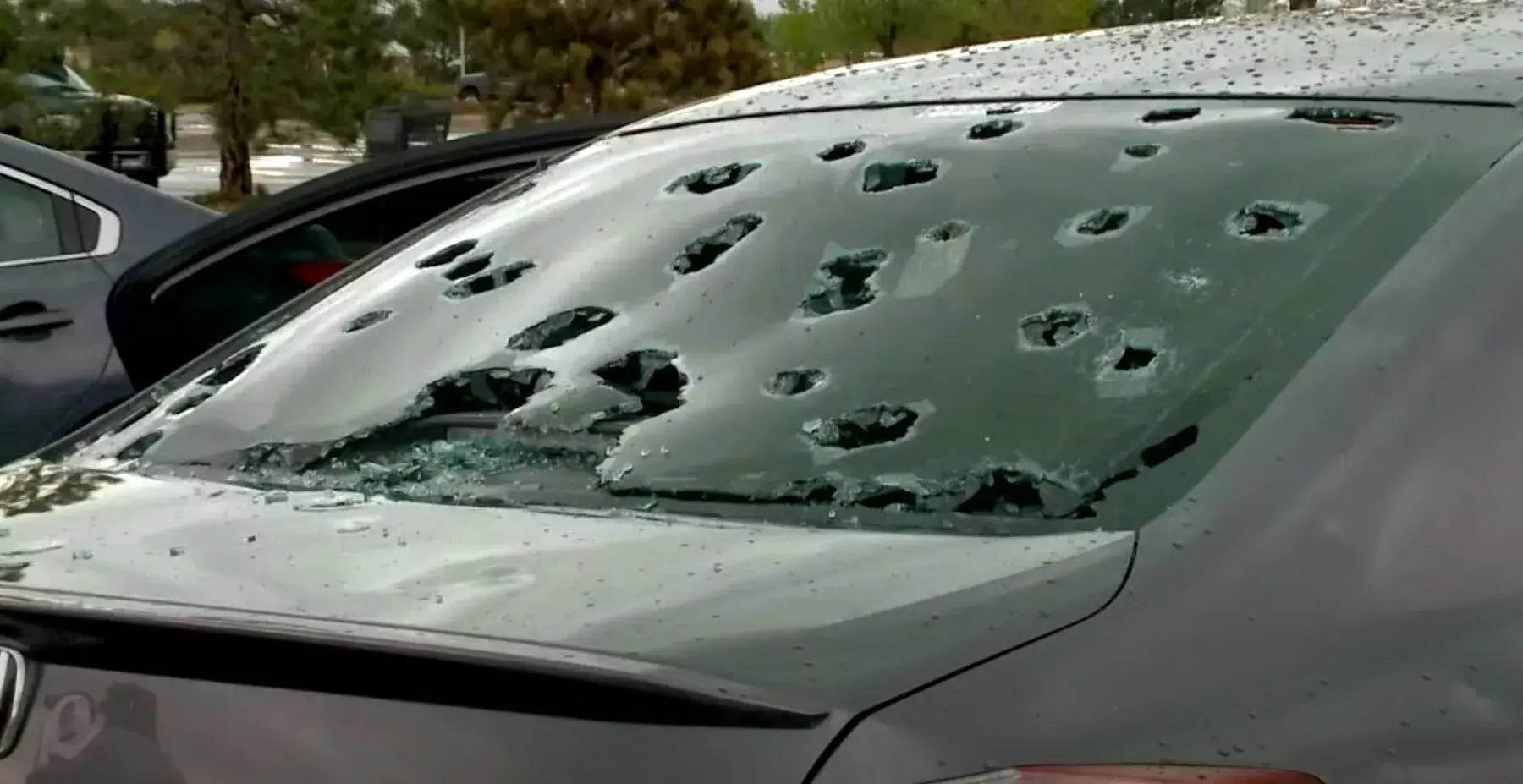
A bruised asphalt shingle has had its mat fractured and its granule bond broken. Its service life is
shortened even if it does not leak this year. A dented metal panel has been deformed. Both are physical
alterations, which is what the insuring agreement asks about.
Check the declarations page first
Cosmetic damage exclusions are usually endorsed and often come with a premium credit the policyholder
accepted without noticing. If one is on your policy, the analysis changes. If it is not, an adjuster's use
of the word “cosmetic” has no contractual content at all.
Fight three: matching
Hail destroys the south and west slopes. The product installed in 2009 is discontinued. Replacing only the
damaged slopes leaves a building with two visibly different roofs.
Whether the insurer must replace the undamaged slopes turns on the policy language — many forms
promise repair with material of “like kind and quality,” and some Colorado authority and
regulatory guidance addresses reasonably uniform appearance. The financial stakes are large: matching often
doubles or triples the claim. It applies to siding, interior flooring and cabinetry as readily as to roofing.
Fight four: depreciation, especially of labour
Replacement cost policies typically pay actual cash value first and release the recoverable depreciation
once repairs are completed and documented. The mechanism is legitimate. Three applications of it are contested:
Depreciating labour. Materials wear out; the act of installing them does not sit on a
roof ageing. A substantial and growing body of authority nationally rejects labour depreciation, and it is
always worth challenging.
Depreciating code-required upgrades. An upgrade required by current code is a new
obligation triggered by the loss, not a used asset with remaining life.
Refusing to release holdback. Once repairs are complete and invoiced, the recoverable
depreciation is owed. Delay at this stage is one of the most common statutory bad faith fact patterns we see.
Fight five: ordinance and law
Building codes change. A 1998 commercial roof will not be permitted to go back exactly as it was: expect
requirements for additional insulation, secondary drainage, updated fastening patterns, and sometimes
structural work to carry the new assembly.
Ordinance or law coverage pays that additional cost, usually in three parts: the value of the undamaged
portion that must be demolished, the cost of demolition, and the increased cost of construction. It is almost
always sub-limited. On an older building it can be the single largest element of the claim, and it is
frequently omitted from the carrier's first estimate entirely.
Fight six: causation and prior storms
The standard causation defence is that the damage predates the claimed storm — an older uninsured
event, foot traffic, thermal cycling, defective installation or simple age.
This is an evidentiary fight, not a legal one. It is answered with dated storm data for the specific
coordinates, hail size reports, an engineer's assessment of impact patterns and fracture characteristics, and
maintenance records showing the condition of the assembly before the loss.
Where a covered peril and an excluded cause genuinely combine, Colorado has historically applied an
efficient proximate cause analysis, asking which peril set the chain in motion. Many modern forms attempt to
displace that with anti-concurrent-causation language, and whether that language achieves what the insurer
claims is itself a live question.
Fight seven: the clock
Most commercial property policies contain a suit limitation clause. Two years from the date of loss is
common, and it is shorter than Colorado's general three-year contract limitation period. The clause runs while
you negotiate. It runs while the insurer reconsiders. It runs while you obtain a second estimate.
Supplemental claims discovered during repair are a particular trap: the work begins eighteen months after
the storm, the true scope emerges, and there are six months left to resolve a claim that has just tripled in
size. Diary the date from the policy the day you read this article.
The evidence file you should be building
Storm claims are decided on evidence gathered in the first fortnight and produced eighteen months later.
The gap between those two dates is why so many good claims are hard to prove.
Evidence
When to capture it
What it establishes
Dated wide and close photographs of every elevation and slope
Before any repair
Scope, and that the damage existed before anyone touched the building
Test squares marked and photographed with a reference object
At the first inspection
Impact density, which drives the repair-versus-replace decision
Soft-metal impacts — vents, gutters, downspouts, HVAC fins
First inspection
Independent corroboration of hail size and direction
Removed material, bagged and labelled
During repair
Defeats the “pre-existing wear” argument better than any photograph
Local storm reports and radar for the exact coordinates
Any time
Date of loss and hail size, which the insurer will otherwise dispute
Maintenance and prior repair records
Immediately
The condition of the assembly before the storm
The carrier's estimate in native line-item format
As soon as it exists
Makes omissions visible; a summary page hides them by design
Public adjusters, contractors and who does what
Three different people will offer to help with a commercial storm claim, and they do genuinely different
jobs. Knowing which one you need saves both money and time.
The contractor
Repairs the building and prices the work. A good one
produces an estimate the carrier's software can be compared against. A contractor is not, and should not
act as, your representative in the coverage dispute.
The public adjuster
Licensed to negotiate the claim on your behalf,
usually for a percentage. Genuinely valuable on scope and valuation. Cannot give legal advice, cannot
interpret coverage for you, and cannot file suit.
The coverage lawyer
Reads the policy, advises on what is owed,
handles denials, reservations of rights, appraisal strategy and litigation — including any statutory
bad faith claim, which is not available to the other two.
How they fit together
They are complementary, not alternatives. Many
of our files run alongside a public adjuster on scope while we handle coverage. Tell each professional
who else is engaged.
A word on assignment of benefits
Contractors sometimes ask a policyholder to sign an assignment of benefits before work begins. That
document can transfer your rights under the policy to a third party. Read it, and have it read, before
signing anything that mentions assignment, direction to pay, or authority to negotiate.
Supplemental claims during the rebuild
Almost every substantial commercial repair uncovers damage nobody could see from the roof: saturated
decking, compromised fasteners, water tracking down an interior wall cavity, insulation that has to come out.
A supplemental claim is the ordinary mechanism for that, and it is entirely proper. Three things make it go
smoothly:
Notify before you cover it up. Give the carrier a real opportunity to inspect the
concealed condition. Photograph it either way.
Tie each supplemental line to the original loss. The question will be whether the newly
discovered damage came from the same storm, and that answer needs to be in the documentation rather than
in an argument later.
Watch the deadline. The suit limitation clause runs from the original date of loss, not
from the day the decking came off. A claim that triples in size in month twenty leaves very little runway.
A practical checklist
Photograph everything before any repair, including test squares and soft-metal impacts.
Keep removed materials. Damaged shingles and panels are evidence.
Request the complete certified policy with all endorsements in force on the date of loss.
Request the carrier's estimate in native line-item format, not a summary.
Obtain an independent scope from an estimator who works to the same standard.
Check for a cosmetic damage endorsement and for ordinance or law sub-limits.
Diary the suit limitation date and work backwards from it.
None of this requires a lawyer to begin. All of it is easier with one, and the reading that tells you which
of the seven fights you are actually in costs nothing.
This guide is general information, not legal advice
Colorado insurance disputes turn on the exact wording of your policy and the facts of your loss.
Nothing here creates an attorney–client relationship. If you want to know what your policy says,
send it — we read it for free.
Civil authority coverage in Colorado: when a government order triggers your business income policy
A government order closed you down and the damage was to someone else's property. That is the exact scenario civil authority coverage was written for — and the exact scenario insurers fight hardest.
What a Colorado insurance bad faith claim is actually worth
Colorado gives policyholders a statutory remedy that does not require proving the insurer knew it was being unreasonable. Here is what it covers, what it is worth, and how it is proved.
 Business income