Davos 2026: A tariff warning that sent shockwaves through global markets
Appraisal is fast, cheap and binding. Those three qualities are exactly why demanding it without thinking can end a claim worth far more than the award.
4 min read Published 2026-10-30 Updated 2026-10-30 Colorado Coverage Lawyers
What began as a political dispute quickly became an economic warning for the world's largest economies. At the World Economic Forum in Davos, Donald Trump's tariff threats forced European leaders, investors and international businesses to confront a difficult reality: even the strongest economic alliances can face sudden uncertainty.
A political dispute with global consequences
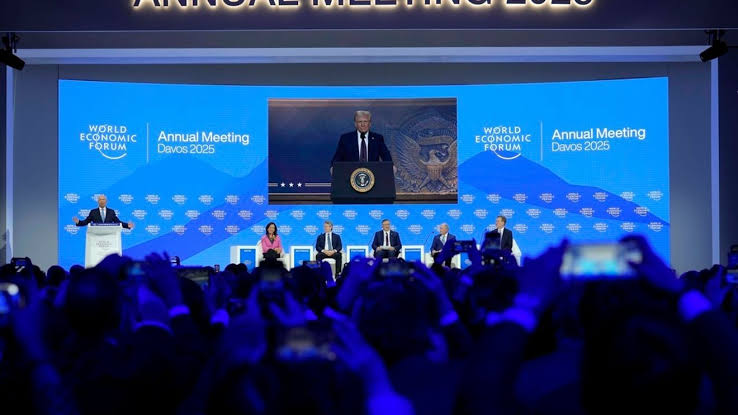
In January 2026, the annual World Economic Forum in Switzerland became the setting for one of the year's most closely watched diplomatic confrontations.
U.S. President Donald Trump had threatened additional tariffs on eight European countries over their opposition to his efforts to gain control of Greenland.
The proposed measures included a 10% tariff beginning February 1, followed by an increase to 25% in June.
For European governments, the announcement represented more than another trade disagreement.
It raised concerns about the future of economic cooperation between the United States and some of its closest allies.
For investors, the situation presented a different question: how quickly could political tensions begin affecting financial markets?
Why financial markets reacted
International markets are particularly sensitive to unexpected changes in trade policy.
New tariffs can increase import costs, disrupt supply chains and create uncertainty for multinational companies.
When businesses cannot predict future trade conditions, they may delay expansion, reconsider investment plans or adjust prices.
The Greenland confrontation demonstrated these risks.
During the escalation, American financial assets came under pressure as investors evaluated the possibility of a broader confrontation between Washington and Europe.
However, the situation changed dramatically on January 21.
Following discussions with NATO Secretary General Mark Rutte in Davos, Trump announced that he would not introduce the planned February tariffs.
The announcement brought relief to investors, and U.S. stock markets moved higher.
The rapid shift illustrated how political announcements can influence market sentiment even before proposed economic measures take effect.
Europe faces a difficult choice
European leaders responded to the crisis by emphasizing the importance of maintaining international cooperation while defending their economic interests.
European Commission President Ursula von der Leyen argued that Europe's future depended on becoming more economically independent.
Her message reflected a growing concern among European policymakers: relying too heavily on a limited number of trading partners can create significant vulnerabilities.
The European Union has therefore been exploring ways to expand relationships with other regions and strengthen its own industrial capabilities.
For European businesses, greater diversification could provide protection against unexpected geopolitical developments.
However, building new partnerships and supply chains requires time, investment and long-term political commitment.
The surprising opportunity behind the crisis
Although tariffs are generally viewed as a threat to economic activity, periods of uncertainty can also accelerate structural changes.
Companies may seek alternative suppliers, introduce new technologies or increase investment in domestic production.
Governments may reconsider outdated trade policies and strengthen cooperation with emerging economic partners.
Industries connected to artificial intelligence, advanced manufacturing, energy infrastructure and automation could become increasingly important as countries focus on technological competitiveness.
But these opportunities are not automatic.
Successful adaptation depends on careful planning, access to capital and stable economic policies.
Why the Davos message matters beyond Europe
The confrontation attracted attention far beyond the United States and European Union.
International businesses depend on interconnected financial systems and global supply chains.
A major disagreement between two important economic partners can influence companies operating in Canada, Asia and other regions.
Investors also monitor how trade restrictions might affect currencies, government bonds, corporate earnings and economic growth.
For ordinary consumers, the consequences can eventually appear through higher prices, changing product availability and employment uncertainty.
This is why tariff negotiations are no longer viewed as technical discussions limited to trade officials.
They have become central to the broader conversation about global economic stability.
A temporary resolution, but unanswered questions
Trump's decision to withdraw the threatened tariffs reduced the immediate risk of escalation.
Nevertheless, European leaders remained concerned about the long-term reliability of transatlantic relations.
The episode demonstrated that even established partnerships can be challenged by sudden geopolitical disagreements.
The future of Greenland, Arctic security and international trade cooperation remained subjects for further diplomatic discussions.
Is the global economy entering a new era?
Davos 2026 revealed a world in which economic decisions and political influence are becoming increasingly interconnected.
The debate is no longer simply about reducing tariffs or expanding trade agreements.
It is also about economic independence, strategic resources, technological leadership and the balance of power between nations.
For businesses and investors, understanding these changes may become just as important as following traditional economic indicators.
The most important lesson from Davos may be that the next major economic disruption will not necessarily begin with a financial crisis. It could begin with a political announcement that changes expectations overnight.
And in an increasingly interconnected world, those expectations can travel across global markets within minutes.
Share this guide
Keep reading
Other guides
Business income
Civil authority coverage in Colorado: when a government order triggers your business income policy
A government order closed you down and the damage was to someone else's property. That is the exact scenario civil authority coverage was written for — and the exact scenario insurers fight hardest.
What a Colorado insurance bad faith claim is actually worth
Colorado gives policyholders a statutory remedy that does not require proving the insurer knew it was being unreasonable. Here is what it covers, what it is worth, and how it is proved.
Colorado hail and wind claims: the seven fights that decide the number
Nobody disputes that the storm happened. The money is decided by seven narrower arguments, and most policyholders never find out they were having six of them.
 Business income